
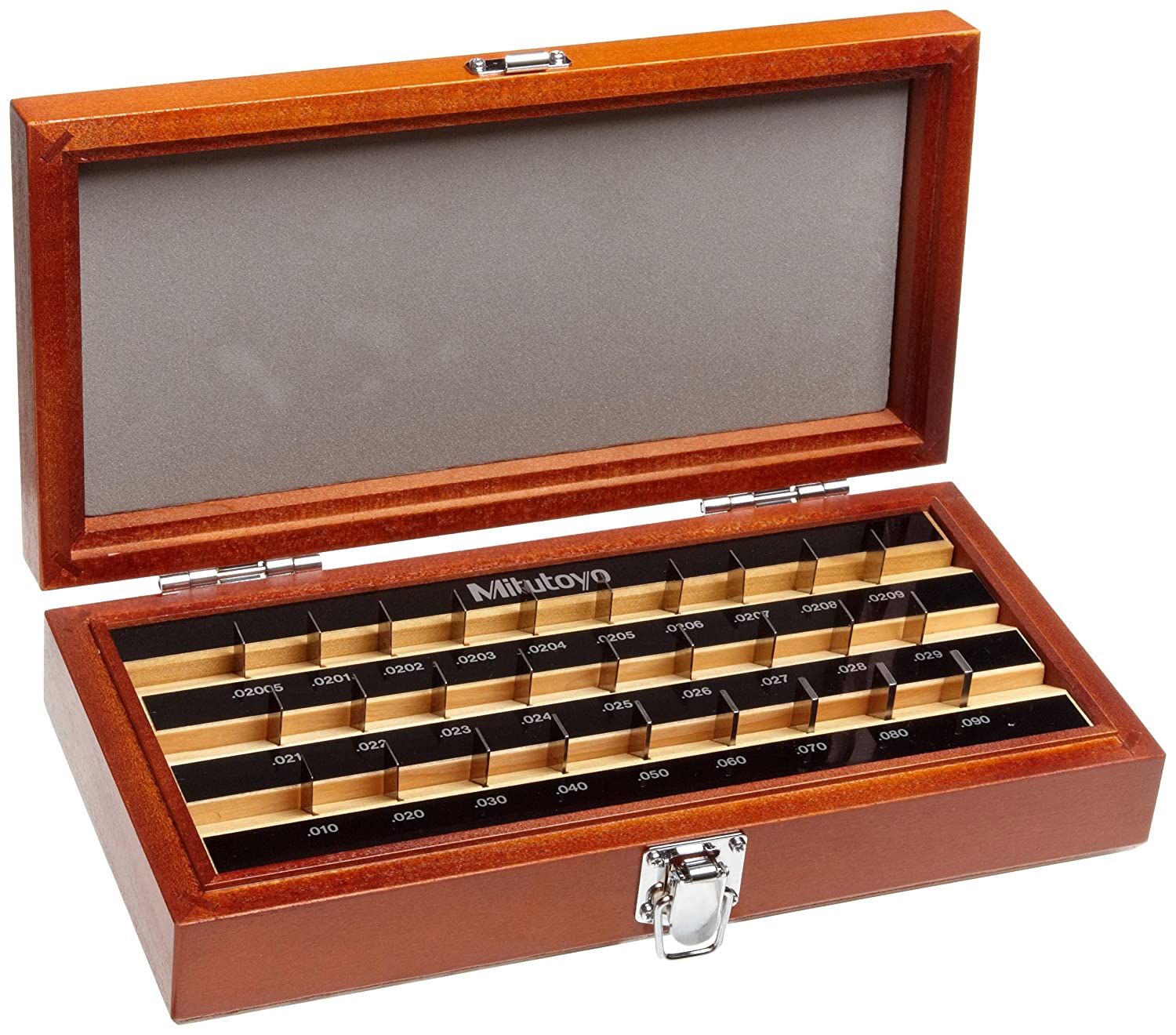
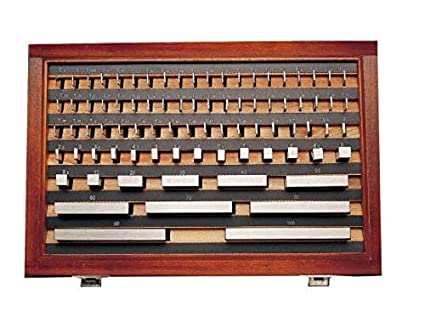
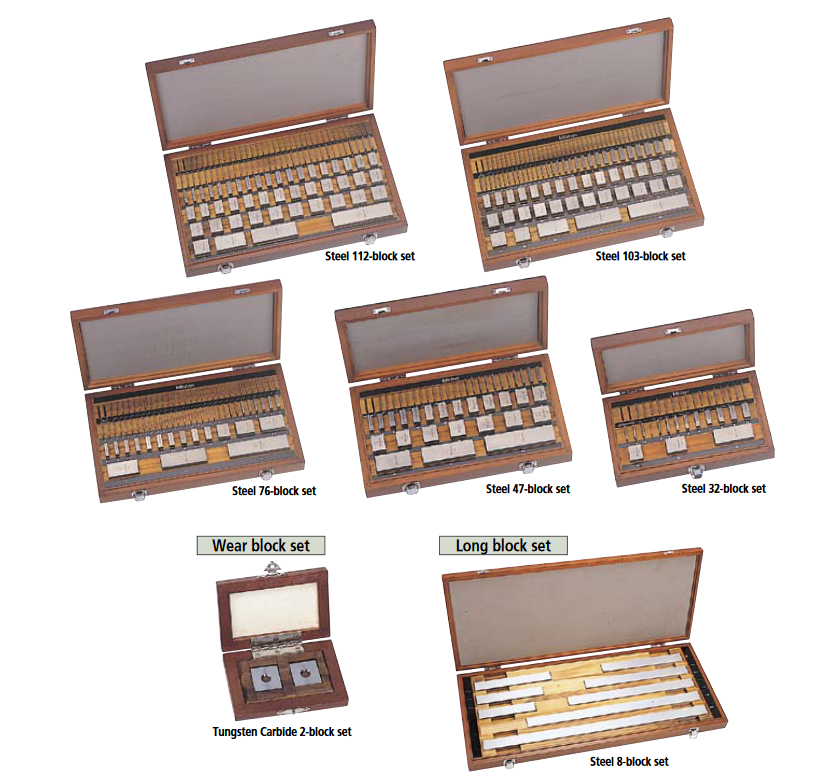
- High-carbon, high-chrome steel provides high hardness and wear-resistance
- Rectangular shape for accurate wringing
- Nominal length (in inches) indicated with laser-etched, black characters
- Identification number etched in block for traceability
Gage blocks (also called gauge blocks, Hoke blocks, Jo blocks, slip gages, and Johansson gages) are blocks used to calibrate measuring equipment and to standardize the measurement of length in manufacturing industries. They are commonly made of precision-ground steel, ceramic, or carbide material, and have a square or rectangular base. Each block has a unique identification number. Length is in inch or millimeter measurement. They can be sold individually, and are also sold in sets with blocks of varying lengths. Gage blocks can be wrung together to create a required length. Wringing is the process of lapping blocks together with a small amount of oil. They are standardized by grade, which refers to the tolerance or deviation of an individual block from its nominal length. Application and required level of accuracy dictate which grade of gage block should be used. Some manufacturers provide an internally-generated certificate of inspection to verify that a gage block meets grade standards. Gage blocks can also go through a calibration certification process to verify measurement accuracy. Calibration is performed by an accredited facility. Gage blocks are commonly recalibrated after use to ensure dimensional accuracy. If a gage block does not meet calibration standards, it should no longer be used. Both a certificate of inspection and a calibration certificate specify the deviation from the nominal length.
Reviews
There are no reviews yet.